In today’s volatile world, institutions across corporate, public, and social sectors face complex risks that can escalate into full-blown crises within minutes. Whether it’s financial instability, operational disruption, regulatory failures, cyber incidents, fraud, reputational damage, or unexpected emergencies—risk is no longer a side concern. It is central to leadership.
Yet, some organisations survive storms better than others. They recover faster, protect their people, maintain stakeholder trust, and often emerge stronger. These organizations share one thing in common:
They are “Risk-Ready.”
Becoming risk-ready means developing the competence, culture, and systems to anticipate risks, absorb shocks, respond intelligently, and rebuild with confidence.
This blog explores how institutions can transform themselves from crisis-prone to crisis-prepared—from instability to institutional resilience.
1 Understanding the New Age of Risk: Why Traditional Approaches Fail
The world today is far more interconnected and unpredictable than ever before. Traditional risk frameworks—static checklists, periodic audits, silo-based risk ownership—are no longer enough.
Risks today are:
- Fast-moving: Issues escalate from minor to catastrophic in hours.
- Interlinked: A compliance lapse can trigger financial penalties, reputational damage, and legal exposure simultaneously.
- Technology-driven: Cyberattack surfaces have expanded dramatically.
- Human-dependent: Ethical lapses, misjudgments, and stress-driven errors are now major contributors to risk.
- Regulator-sensitive: Regulatory scrutiny across sectors is increasing every year.
Institutions that rely only on outdated, reactive risk systems are vulnerable. Leaders must shift from a defensive mindset (“Hope this doesn’t happen to us”) to a proactive readiness mindset (“We are prepared even if it does happen”).
This shift is strategic—not optional.
2 The Crisis Lifecycle: The 4 Stages Every Organisation Must Master
Crisis management is not only about reacting to emergencies. A risk-ready institution manages the entire risk lifecycle:
Stage 1: Anticipation
This involves identifying vulnerabilities before they become threats.
- Risk assessments
- Vulnerability mapping
- Scenario planning
- Early-warning indicators
- Fraud and compliance checks
Stage 2: Preparedness
Organizations prepare people, systems, and processes to respond effectively.
- Crisis manuals
- Emergency response protocols
- Governance structures
- Training and simulations
- Business continuity planning
Stage 3: Response
When crisis hits, response must be:
- Fast
- Informed
- Coordinated
- Transparent
This includes real-time advisory, decision-making frameworks, and communication strategies.
Stage 4: Recovery & Learning
Post-crisis actions ensure long-term stability and improvement:
- Damage assessment
- Process strengthening
- Policy redesign
- Stakeholder reassurance
- Knowledge capture
Most organizations only focus on reaction, ignoring the rest.
A risk-ready institution masters all four stages.
3 Building a Risk-Ready Institution: The Core Pillars
To move from crisis to confidence, institutions must build five foundational pillars.
Pillar 1: Leadership Clarity & Governance
Risk-readiness starts at the top.
Leadership must:
✔ Prioritize risk in strategic decision-making
✔ Establish a culture of transparency
✔ Empower teams with autonomy in emergencies
✔ Ensure accountability across departments
✔ Model ethical conduct
Boards and senior leaders must actively engage with risk—reviewing reports, challenging assumptions, and providing resources.
Pillar 2: A Unified Risk & Compliance Framework
Fragmented risk management is dangerous.
A risk-ready institution integrates all risk types into a single framework:
- Financial
- Operational
- Reputational
- IT & cyber
- Legal & regulatory
- Fraud & misconduct
- Environmental & social risks
A unified framework ensures:
✔ No blind spots
✔ Faster decision-making
✔ Consistent governance
✔ Stronger internal controls
✔ Better reporting
Pillar 3: Strengthened Internal Controls & Fraud Prevention Systems
Internal control failures are among the top causes of crisis globally.
Institutions must build:
- Segregation of duties
- Audit-ready documentation
- Automated checkpoints
- Verification & monitoring systems
- Ethics and anti-corruption frameworks
Fraud is not just a financial threat—it is a reputational and regulatory crisis. Prevention is always cheaper than remediation.
Pillar 4: Crisis-Ready People & Culture
Systems matter—but people decide outcomes during crises.
A risk-ready culture includes:
- Leadership that encourages reporting of issues
- Employees trained to recognize early warning signals
- Managers capable of confident, ethical decision-making
- Teams prepared through drills and simulations
Simulation-based risk education—one of my core strength core strengths—helps teams build real crisis instincts.
Pillar 5: Technology-Enabled Risk Monitoring
Technology amplifies readiness.
Modern institutions use:
- Real-time risk dashboards
- Automated incident detection
- Compliance management systems
- Data-driven risk analytics
- Cyber monitoring tools
Technology reduces human error, accelerates response, and improves oversight.
4 The Human Side of Crisis: How People Behave Under Pressure
Crises reveal behaviours that normal operations never show.
Under stress, people may:
- Panic
- Hide information
- Delay decisions
- Make irrational choices
- Miscommunicate
- Overcommit or freeze
Understanding human behaviour in crises helps leaders design better systems.
Simulation-based training is powerful because it replicates psychological pressure—teaching leaders to think clearly under stress.
5 Real-World Failures: What We Learn from Major Crisis Cases
Across industries, crisis patterns show common causes:
❌ Weak internal controls
Leading to fraud, financial mismanagement, or misuse of authority.
❌ Over-reliance on individuals
When key people leave, the system collapses.
❌ Poor communication
Internal confusion + external misinformation = reputational damage.
❌ Lack of preparedness
Organisations without scenario planning or drills face chaos.
❌ Regulatory non-compliance
Failing to meet standards leads to investigations, penalties, and credibility loss.
❌ No post-crisis learning
Repeating the same mistakes makes institutions fragile.
These lessons emphasize why risk-readiness is not optional—it’s essential for survival.
6 Turning Crisis into Opportunity: The Risk-Ready Advantage
When institutions prepare well, crises transform into growth opportunities.
A risk-ready institution gains:
✔ Higher stakeholder trust
Boards, regulators, clients, and communities see the organisation as credible.
✔ Faster operational recovery
Prepared organisations resume normal operations quickly.
✔ Improved decision-making
Clear frameworks reduce confusion and conflict.
✔ Regulatory confidence
Compliance culture reduces exposure and enhances reputation.
✔ Stronger internal discipline
Teams become more responsible, accountable, and aligned.
✔ Competitive advantage
Institutions that handle crises well stand out in crowded markets.
Risk-readiness becomes a branding asset.
7 How I Can Helps Institutions Become Risk-Ready
I am specializes in transforming organisations from vulnerable to resilient through:
✔ 360° Risk Assessment & Mitigation
Identifying internal and external risks with actionable solutions.
✔ Governance Strengthening & Compliance Frameworks
Making institutions audit-ready and regulator-ready.
✔ Fraud & Operational Risk Management
Detecting vulnerabilities and closing control gaps.
✔ Emergency Support & Real-Time Crisis Advisory
Immediate guidance during crises to reduce damage.
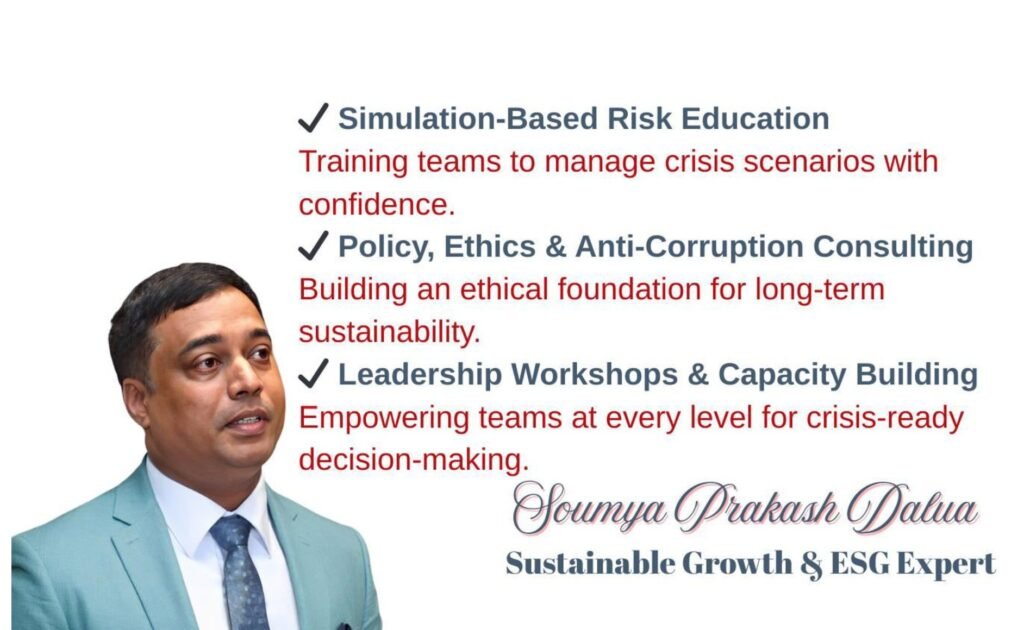
✔ Simulation-Based Risk Education
Training teams to manage crisis scenarios with confidence.
✔ Policy, Ethics & Anti-Corruption Consulting
Building an ethical foundation for long-term sustainability.
✔ Leadership Workshops & Capacity Building
Empowering teams at every level for crisis-ready decision-making.
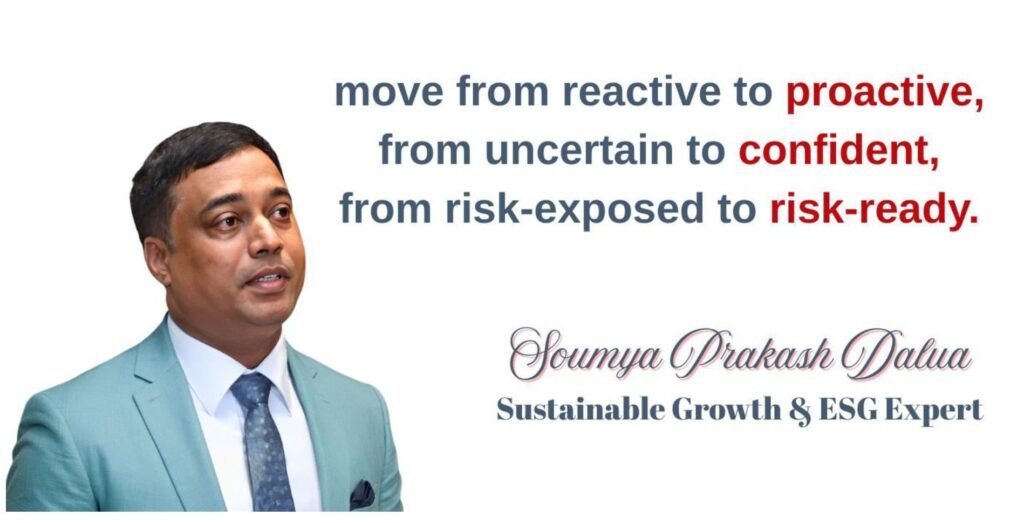
I helps organizations move from reactive to proactive, from uncertain to confident, from risk-exposed to risk-ready.
8 The Roadmap: Steps to Build a Risk-Ready Institution
Step 1: Conduct a comprehensive risk audit
Identify vulnerabilities across all departments.
Step 2: Build an integrated risk governance framework
One system, one responsibility structure, one oversight mechanism.
Step 3: Strengthen internal controls
Automate, document, verify, and monitor.
Step 4: Create crisis manuals and emergency protocols
Clear instructions prevent chaos.
Step 5: Train leaders through real-world simulations
Practical experience builds instinct and resilience.
Step 6: Build a continuous monitoring system
Technology-enabled dashboards & alerts.
Step 7: Establish a culture of early reporting
Encourage transparency and accountability.
Step 8: Conduct periodic reviews & learning sessions
Every incident becomes a learning opportunity.
9 A Crisis-Free Organisation Doesn’t Exist—But a Crisis-Ready One Does
No institution can eliminate all risks.
No organisation is immune to disruption.
But with the right systems, governance, culture, and preparedness, crisis does NOT have to mean catastrophe.
A crisis-ready institution remains stable, strong, and credible—even in the most unpredictable circumstances.
That is the true meaning of organisational resilience.
That is the future of modern governance.
That is the journey from crisis to confidence.