Introduction: Why Risk & Compliance Matters More Than Ever
In today’s volatile business environment, risk and compliance are no longer legal obligations—they are strategic tools for survival and growth. In India, the regulatory ecosystem is rapidly evolving due to digital transformation, ESG mandates, cybersecurity threats, and global investor expectations.
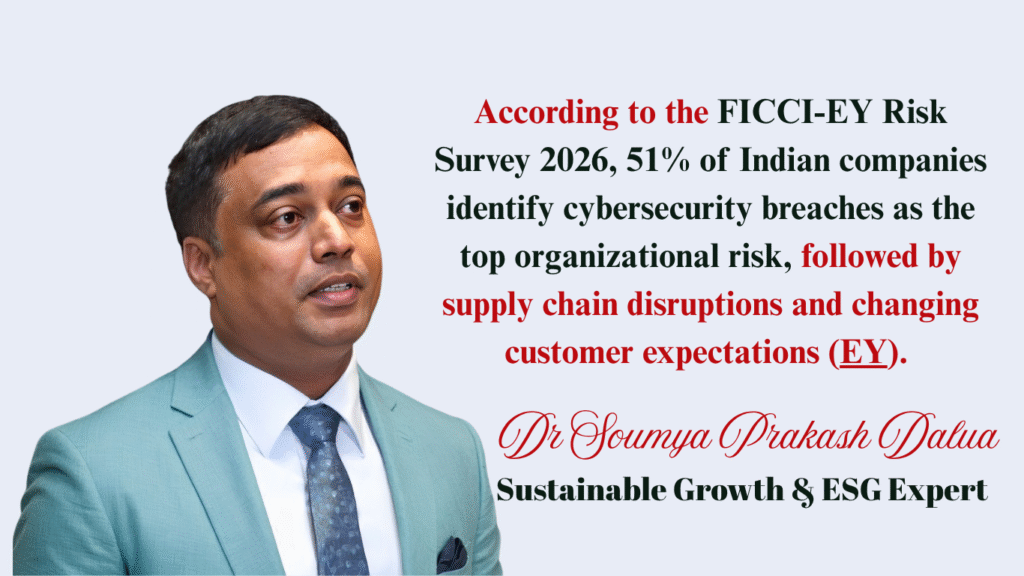
According to the FICCI-EY Risk Survey 2026, 51% of Indian companies identify cybersecurity breaches as the top organizational risk, followed by supply chain disruptions and changing customer expectations (EY). This highlights how Indian businesses are moving from traditional compliance systems to integrated risk intelligence frameworks.
For MSMEs and corporates alike, the future belongs to organizations that can anticipate risks, comply proactively, and build resilience.
The Indian Risk & Compliance Landscape in 2026
India is witnessing a major transformation in governance and compliance frameworks:
- The Governance, Risk and Compliance (GRC) platform market in India reached approximately USD 1.78 billion in 2025, and is projected to grow at over 10% CAGR till 2034 (IMARC Group)
- SEBI has strengthened ESG disclosure norms for top listed companies
- CSR, environmental, and digital compliance requirements are expanding rapidly
- MSMEs face increasing regulatory obligations, often exceeding 1,000+ compliance requirements annually (sector-based estimates)
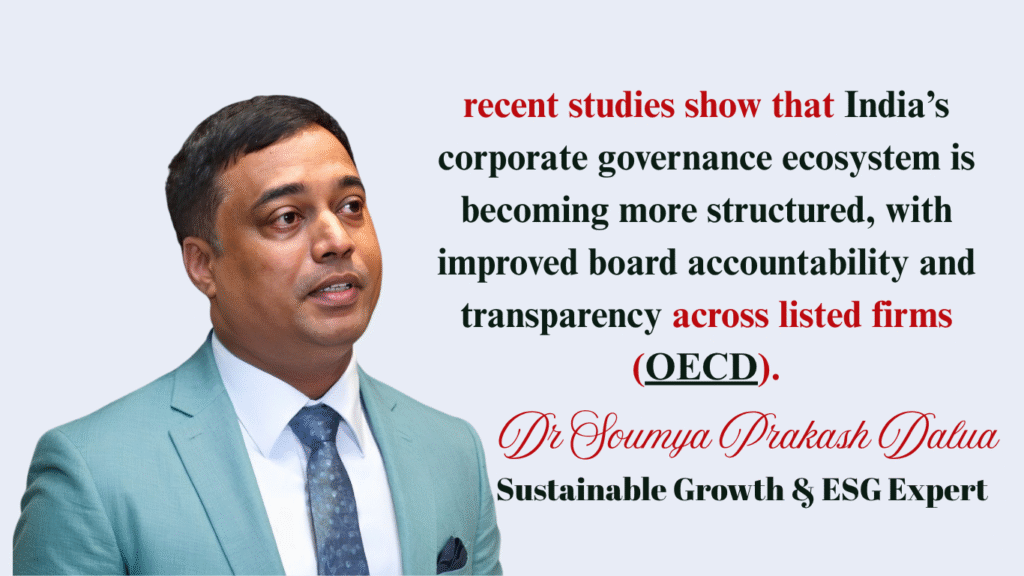
Additionally, recent studies show that India’s corporate governance ecosystem is becoming more structured, with improved board accountability and transparency across listed firms (OECD).
Key Business Risks in India (2026 Outlook)
1. Cybersecurity & Data Risks
Digital adoption has increased vulnerability. Data breaches, ransomware attacks, and AI-driven fraud are rising threats.
2. Regulatory Complexity
Multiple regulators (SEBI, MCA, RBI, MoEFCC) create overlapping compliance requirements, increasing operational burden.
3. ESG & Sustainability Pressure
Investors now prioritize ESG performance. Companies failing ESG compliance risk losing global funding opportunities.
4. Supply Chain Disruptions
Global geopolitical tensions and logistics instability continue to impact Indian businesses.
5. Financial & Operational Risks
Credit risks in MSMEs and delayed payments remain major challenges in India’s industrial ecosystem.
Smart Risk & Compliance Strategies for 2026
1. Digital Compliance Automation
Adopt GRC platforms and AI-driven compliance tools to reduce manual errors and improve tracking.
2. ESG Integration in Core Strategy
Move ESG from reporting level to operational decision-making—energy, workforce, governance, and procurement.
3. Real-Time Risk Monitoring
Use data analytics dashboards to monitor financial, legal, and operational risks continuously.
4. Strong Internal Audit Systems
Strengthen internal controls, whistleblower mechanisms, and compliance audits.
5. Employee Compliance Training
Build a compliance-aware workforce to reduce violations and improve governance culture.
Why MSMEs Must Prioritize Compliance Early
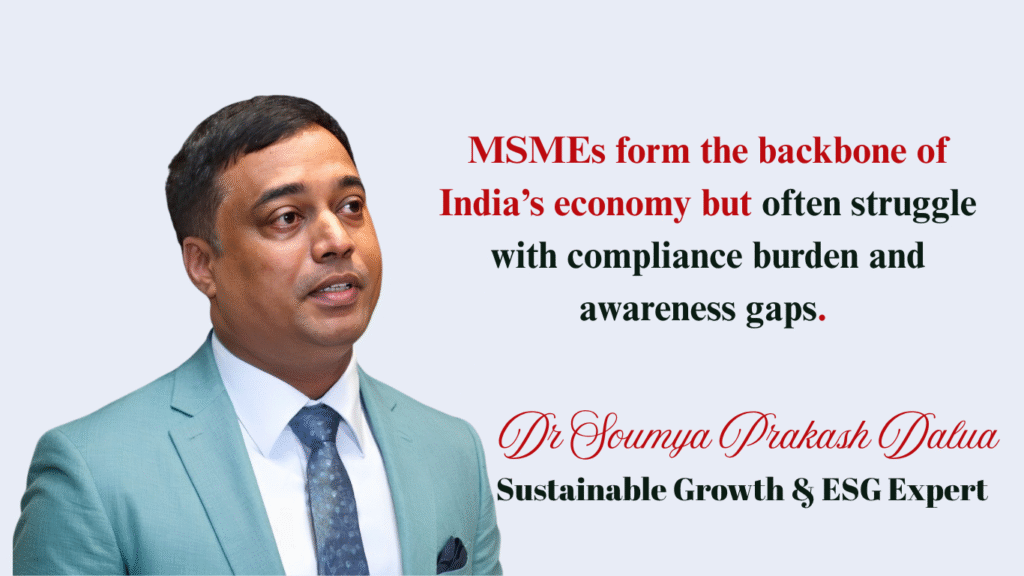
MSMEs form the backbone of India’s economy but often struggle with compliance burden and awareness gaps. Reports indicate that compliance costs and regulatory complexity significantly impact MSME scalability and profitability.
A proactive compliance system helps MSMEs:
- Avoid penalties and legal risks
- Improve investor confidence
- Access formal credit easily
- Scale sustainably in global markets
SEO Keywords (for Website Optimization)
- Risk and compliance in India 2026
- ESG compliance India
- MSME risk management India
- corporate governance India
- business risk strategies 2026
- regulatory compliance India
- governance risk compliance (GRC) India
- cybersecurity risk India businesses
- future of compliance management
- sustainable business strategies India
Conclusion
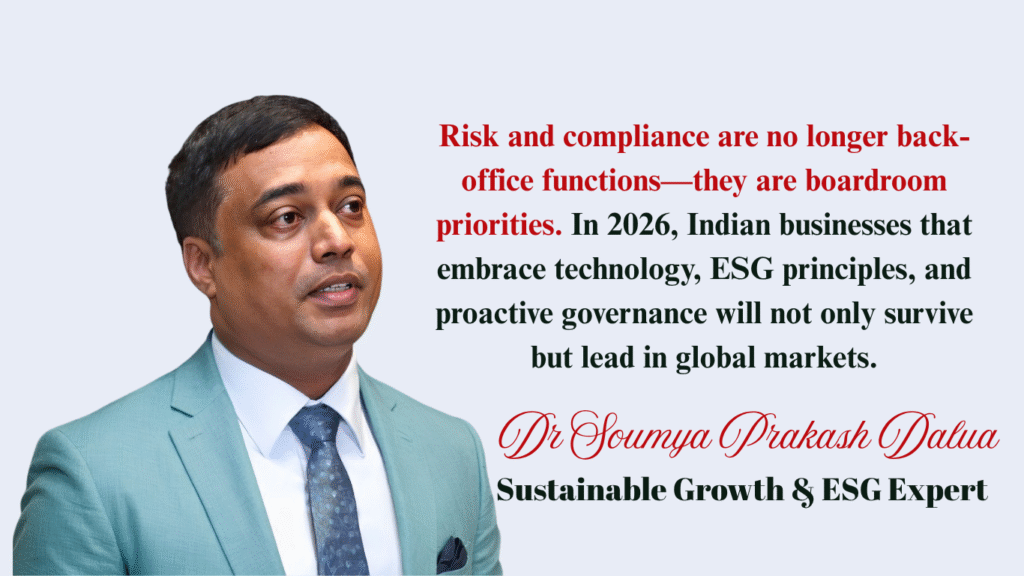
Risk and compliance are no longer back-office functions—they are boardroom priorities. In 2026, Indian businesses that embrace technology, ESG principles, and proactive governance will not only survive but lead in global markets.
The future belongs to organizations that treat compliance not as a burden—but as a competitive advantage.
👉 Is your business ready for the next level of risk and compliance transformation?
Partner with experts who can help you design future-ready compliance systems, ESG frameworks, and risk management strategies tailored for Indian businesses.
📩 Connect today to build a resilient, compliant, and future-proof organization.