In today’s fast-moving business landscape, one factor silently shapes the future of every growing company—land acquisition. Whether it is for setting up a new manufacturing unit, expanding warehousing capacity, opening a logistics hub, or creating a long-term asset base, land is not just a physical space; it is a strategic advantage.
For many companies and SMEs, however, land acquisition often becomes a confusing maze—legal complexities, unclear titles, slow government approvals, valuation errors, and compliance challenges. As a consultant supporting businesses across sectors, I help organisations turn this challenge into a smooth, structured, and risk-free process.
Let’s understand why land acquisition matters and how the right approach saves time, money, and long-term complications.

Why Land Acquisition Matters for Companies & SMEs
1. Foundation for Business Expansion
Every business expansion—factories, cold storage, warehouses, corporate parks, retail outlets, or service centres—begins with land. A wrong choice today can become a costly obstacle tomorrow.
A strategically acquired land parcel helps you:
- Expand capacity easily
- Reduce operational costs
- Improve supply chain reliability
- Increase long-term asset value
2. A High-Value Long-Term Asset
Unlike machinery, vehicles, or equipment that depreciate, land appreciates. For SMEs, it becomes a strong balance-sheet asset that boosts financial strength, improves creditworthiness, and supports future loans or investments.
3. Strategic Location Advantage
Location is not just convenience—it’s profit.
A well-chosen land parcel reduces logistics costs, improves market reach, and enhances customer access. Companies that invest wisely in land outgrow competitors faster.
4. Compliance and Risk Protection
Industries require land that meets specific compliance needs—industrial zoning, environmental approvals, NOCs, fire safety, road access, and more.
Professional land acquisition ensures:
- Title clarity
- Zero encroachment
- Legal documentation
- Regulatory alignment
- Smooth approvals
This protects companies from litigation, shutdowns, and penalties.
Common Challenges Companies Face in Land Acquisition
Most businesses struggle because the process is complex and scattered across multiple departments.
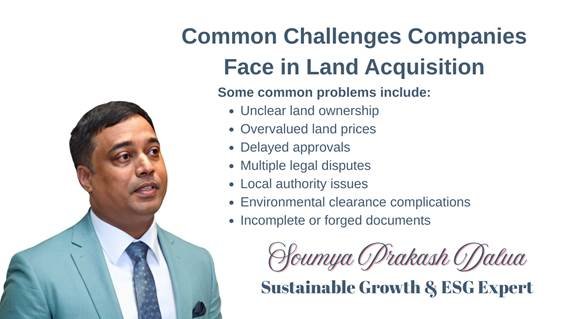
Some common problems include:
- Unclear land ownership
- Overvalued land prices
- Delayed approvals
- Multiple legal disputes
- Local authority issues
- Environmental clearance complications
- Incomplete or forged documents
A small mistake here can cost businesses months of delay and lakhs of rupees in losses.
How I Help Companies & SMEs: End-to-End Land Acquisition Support
As a consultant, I support companies through a structured and risk-free approach, ensuring the entire process is transparent, legal, and strategically beneficial.
My Support Includes:
1. Requirement Assessment & Location Identification
Understanding your business model, production needs, logistics routes, and expansion goals to identify the best land options.
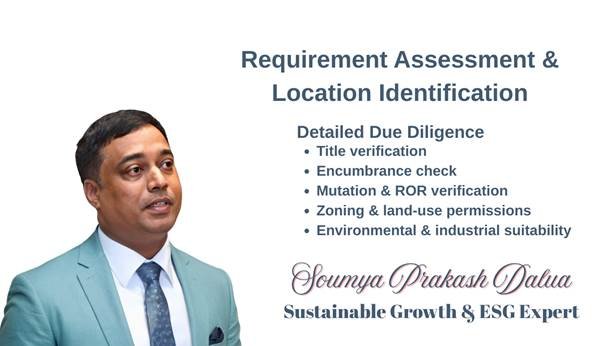
2. Detailed Due Diligence
- Title verification
- Encumbrance check
- Mutation & ROR verification
- Zoning & land-use permissions
- Environmental & industrial suitability
3. Fair Market Valuation
I ensure you never overpay.
Through comparative analysis, market study, and negotiation support, I help companies get the best land at the right price.
4. Legal & Documentation Support
Preparing and validating all essential documents such as:
- Sale deed
- Power of attorney
- NOCs
- Registration
- Change of land use (CLU)
- Conversion approvals
- Government permissions
5. Liaison With Authorities
Smooth coordination with revenue departments, municipal bodies, industrial development authorities, and compliance offices.
6. End-to-End Transaction Support
From first site visit to final registration, I ensure a seamless and transparent experience.
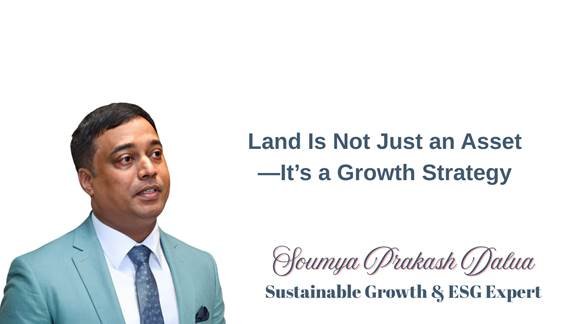
Conclusion: Land Is Not Just an Asset—It’s a Growth Strategy
For every company or SME planning expansion, the right land acquisition is the first and most important step. When done professionally, it becomes the foundation for operational success, financial strength, and long-term sustainability.
With expert guidance, businesses can avoid legal risks, save significant time and cost, and secure land that powers future growth.