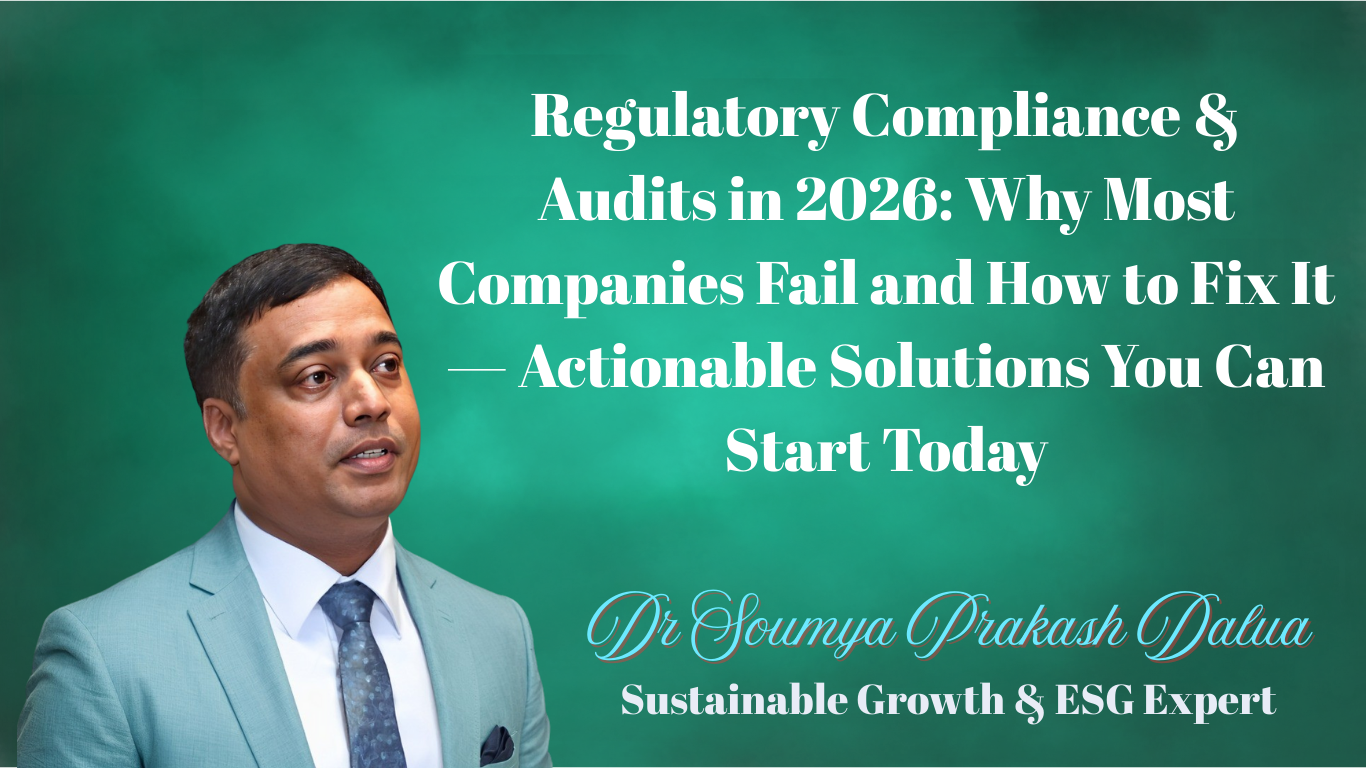
By: Soumya Prakash Dalua
In today’s rapidly evolving regulatory environment, compliance is no longer just a legal requirement—it is a business survival strategy. In India, companies—especially MSMEs and mid-sized enterprises—are facing increasing regulatory complexity, rising penalties, and stricter enforcement mechanisms from authorities.
Rising Compliance Pressure in India
India’s business ecosystem is one of the most regulated globally. Recent studies highlight that a typical manufacturing MSME in India deals with over 1,400–1,500 compliance obligations every year, across labour laws, taxation, environmental rules, and corporate governance requirements. These obligations include inspections, filings, licenses, and statutory reporting requirements. (ETCFO.com)
The financial burden is also significant. Compliance costs for MSMEs are estimated at ₹13 lakh to ₹17 lakh annually, putting pressure on small businesses with limited financial and human resources. (ETCFO.com)
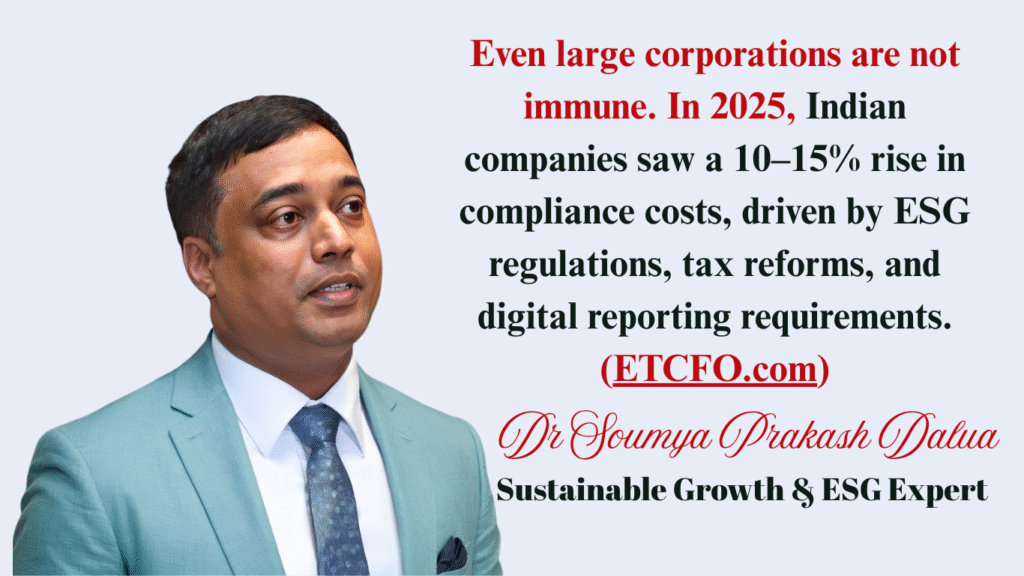
Even large corporations are not immune. In 2025, Indian companies saw a 10–15% rise in compliance costs, driven by ESG regulations, tax reforms, and digital reporting requirements. (ETCFO.com)
Why Non-Compliance is Becoming Costly
The enforcement system in India has become more stringent. Regulatory authorities like the RBI, SEBI, GST Department, and Labour Commissioners are increasingly imposing financial penalties for non-compliance.
For instance, the Reserve Bank of India imposed penalties worth ₹54.78 crore on banks and NBFCs in FY25 due to regulatory violations and compliance lapses. (The Times of India)
For businesses, even minor procedural lapses can lead to:
- Heavy monetary penalties
- Loss of licenses and approvals
- Legal proceedings
- Damage to business reputation
- Restricted access to funding and investors
Key Compliance Challenges in Indian Businesses
- Complex Regulatory Framework
Indian companies must comply with multiple regulators like MCA, GST Council, SEBI, RBI, and state departments. - Frequent Rule Changes
Tax laws, ESG reporting norms, and labour codes are continuously evolving, making compliance tracking difficult. - High Cost of Compliance Management
Many MSMEs lack dedicated compliance teams, leading to dependence on external consultants. - Digital Compliance Transition
New systems like e-invoicing, ESG disclosures (BRSR), and digital audits require technological readiness.
Emerging ESG & Governance Compliance Trends
Environmental, Social, and Governance (ESG) compliance has become a key focus area in India. As per SEBI norms, a majority of top listed companies now publish sustainability disclosures, and ESG reporting is becoming a standard requirement in corporate governance frameworks. (SCC Online)
This shift shows that compliance is no longer just financial—it now includes sustainability, ethics, and corporate responsibility.

Essential Compliance Practices to Avoid Penalties
1. Build a Compliance Calendar
Track all filings, renewals, audits, and statutory deadlines in one structured system.
2. Adopt Digital Compliance Systems
Use ERP, compliance software, or automated reminder systems for GST, TDS, PF, and ESG reporting.
3. Assign Compliance Ownership
Every compliance task must have a clearly responsible person to avoid confusion and delays.
4. Conduct Internal Audits
Quarterly internal audits help identify risks before regulatory inspections.
5. Train Employees Regularly
Awareness of rules reduces human error and improves compliance culture.
Conclusion
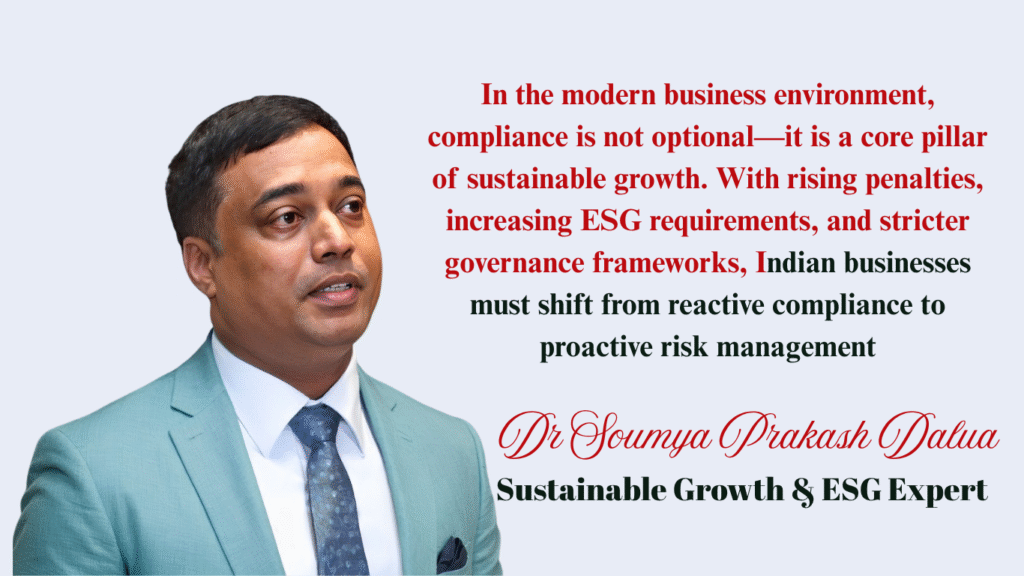
In the modern business environment, compliance is not optional—it is a core pillar of sustainable growth. With rising penalties, increasing ESG requirements, and stricter governance frameworks, Indian businesses must shift from reactive compliance to proactive risk management.
Organizations that invest in strong compliance systems today will not only avoid penalties but also build trust, attract investment, and ensure long-term business stability.